
Coupon24: Verified Coupons
SigmaLedger, IncShopping
4.7279.00 Reviews
- Version
- 1.42
- Installs
- 100.00K
- Age Rating
- Everyone
Screenshots
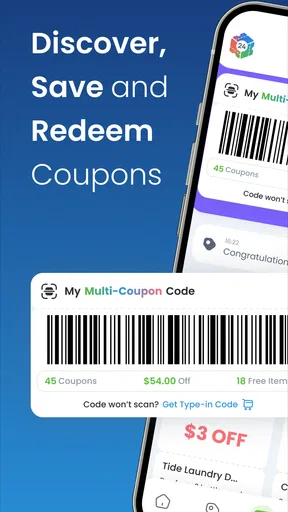
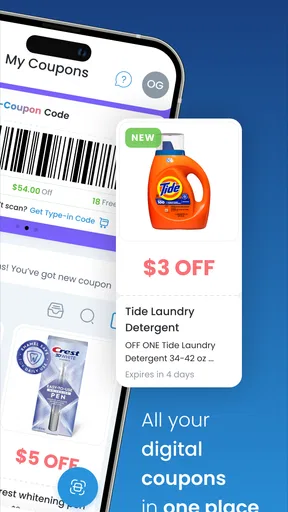
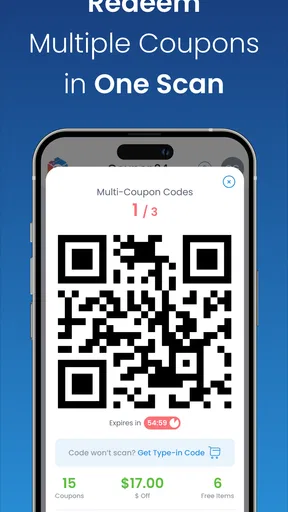

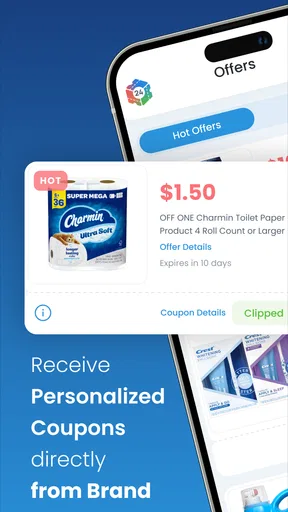
Our Review of Coupon24: Verified Coupons
 Analysis by Appyee
I started using Coupon24: Verified Coupons with a simple household question in mind: could one shopping app make everyday bargain hunting easier when more than one person is buying things, without turning the process into another shared chore? My experience was mixed in a useful way. The app is easy to approach, free to install, and focused clearly on coupons and shopping deals, but it works best when each person treats it as a quick discovery tool rather than a complete household shopping system.
That distinction matters. A coupon app can help someone notice a saving before paying, yet it does not automatically decide which offer suits the family, remember every preference, or coordinate a full shopping trip. Coupon24 sits closer to the first part of that process. I found it most helpful when I already knew I was going to shop and wanted to check whether a deal was worth considering before committing time or money.
How Coupon24 fits into shared everyday shopping
The app comes from SigmaLedger, Inc and belongs firmly in the shopping category. Its purpose is straightforward: bring deals for ordinary purchases into one place so I can browse before I buy. That makes it a natural fit for a shared household where different people may handle groceries, toiletries, clothing, gifts, or occasional online orders.
Imagine a typical evening. One person notices that the household needs cleaning supplies, another is planning a weekend grocery run, and someone else is looking for a small birthday present. Instead of each person searching from scratch, they can open Coupon24 and look for relevant offers before visiting a retailer or completing an order. The practical benefit is not that the app replaces shopping; it gives the household a common starting point for checking possible savings.
I like this use because it keeps the app’s role realistic. It is not necessary for every purchase, and I would not open it for a tiny, urgent item if the search takes longer than the possible saving. For planned shopping, however, a short check can be worthwhile. The best habit is to browse before leaving home or before reaching the payment screen, when there is still time to change the store, product, or order timing.
On a shared device, the experience is especially simple because the next person can inspect deals without needing a complicated handover. That convenience also creates a boundary: whoever opens the app should remember that a coupon discovery tool is not the same as a shared account, shared wallet, or shared purchase history. I would use it alongside the household’s existing shopping arrangements, not as a replacement for them.
The app has a 4.7 average from around two and a half thousand ratings, with roughly two hundred seventy-nine written reviews. That level of public response suggests that many users find the basic idea useful, although a rating cannot tell me whether every deal will suit my local shopping habits. I treat it as encouragement to try the app, not as a promise that every coupon will be relevant.
A sensible first session
My recommended first session is deliberately brief. I would open the app, look for something I genuinely expect to buy, and judge the results by usefulness rather than by how many offers appear. If the deals help me compare options or remind me to check for a discount, the app has earned a place in my routine. If browsing produces distractions without improving a real purchase, I would close it and return only when I have a specific shopping need.
This approach avoids one of the common traps of coupon services: saving money on things the household never intended to purchase. A discount is not automatically a bargain if it encourages an unnecessary order. I found Coupon24 more valuable when I used it as a final check on planned spending than when I browsed aimlessly for entertainment.
Setting boundaries before several people use it
Coupon24 is free, which removes the biggest barrier to trying it. The age rating is Everyone, so it is suitable for a broad household audience in the ordinary sense. Still, an Everyone rating should not be confused with permission to let a child make purchases or handle payment information without supervision. The app can help someone find a deal, but the adult responsible for the purchase should still decide whether the retailer, product, and final cost are appropriate.
This is where I would set clear household rules. A child might be allowed to search for a coupon for school supplies, while an adult completes the purchase. A teenager could compare offers for a planned item, but should confirm the final price and delivery terms before ordering. Another adult in the home might use the app independently, while agreeing to share important deal details in a household chat or shopping list.
These boundaries are not a criticism of the app; they are a sensible separation between finding an offer and authorizing spending. Coupon24 is useful at the discovery stage, but I would not assume that everyone using the same device has the same authority. If a phone or tablet is shared, the person holding it should avoid leaving a retailer checkout open and should not treat a coupon screen as proof that an order has been placed.
I also prefer keeping the app’s role narrow. I would not hand over a device and say, “Buy whatever is discounted.” Instead, I would give a task such as finding a possible offer for a specific product category, then review the result together. That small change makes the app more useful and prevents the excitement of a deal from taking over the household budget.
Coordinating coupons without creating extra work
The strongest shared-use workflow I found is simple: one person identifies the planned purchase, another checks Coupon24, and the buyer confirms the offer at the retailer before paying. This division works because it gives the app a clear job while leaving the final decision with the person who understands the household’s needs.
For example, if I am responsible for a weekly shop, I might check the app for deals before making my list. If another household member finds a promising coupon, I would want the exact product or category and the retailer context, not just a message saying “there is a discount.” That information makes coordination faster and reduces the chance of chasing an offer that does not apply to the item we actually need.
A useful habit is to record only the deals that affect the current shopping trip. I would avoid building a giant collection of possible bargains because old or irrelevant offers can make a list harder to follow. A short note with the item, the retailer, and the action required is more practical than forwarding every interesting coupon to everyone.
There is also a trade-off between centralization and flexibility. One person can become the household’s deal checker, which keeps the process tidy, but that person may miss a coupon another shopper would have noticed. Letting everyone browse freely increases discovery but can create duplicate effort. My preference is a light system: whoever is already planning the purchase checks first, and others contribute only when they have a specific deal or shopping idea.
I would also verify the offer at the point of use. Coupon24 can help me find a possibility, but the retailer’s checkout is where I need to confirm that the product qualifies and that the final total makes sense. This is particularly important when a household is comparing different brands or sizes. A coupon attached to a smaller package may not be the cheapest choice, and a discounted item may still cost more than the ordinary alternative.
Trust, age, and the difference between discovery and buying
The Everyone age context makes Coupon24 approachable for families, but trust still has to be managed by the people using it. I would be comfortable showing a younger user how to search for a deal, yet I would explain that a coupon is not cash and that a displayed offer is not a reason to purchase something unnecessary.
For older children and teenagers, the app can support useful lessons about comparison shopping. I might ask them to locate an offer, compare the discounted item with a similar product, and calculate whether the saving matters for the planned budget. This turns coupon browsing into a practical exercise rather than a race to collect promotions.
With older relatives or less confident smartphone users, the value is different. The straightforward shopping focus can make it easier to demonstrate than a retailer app packed with account settings and checkout steps. I would still stay nearby the first few times, especially if the person is likely to follow a retailer link or enter payment details afterward. The app may begin the shopping journey, but the later steps deserve the same caution as any online purchase.
Shared-device use also raises a basic privacy habit: each person should finish what they are doing before handing over the phone. I would close retailer pages, remove an unfinished shopping basket from view, and avoid assuming that the next user knows what the previous person intended to buy. These are ordinary device habits, but they matter more when several people rely on one screen.
For a household with strict purchasing controls, Coupon24 may be best kept with the adult who manages spending. For a household that wants children to learn about prices, supervised browsing can be worthwhile. The app itself does not need to become the family’s authority system; the family should decide who may search, who may approve, and who may complete a transaction.
What it does well compared with usual shopping alternatives
The usual alternative is to search each retailer separately, open a search engine, or wait for promotional emails. Those methods can work, but they scatter the process. Coupon24 is more convenient when I want a quick deal check without beginning with one particular store. That broader starting point is its clearest advantage for everyday shopping.
A retailer’s own app may be better when I already know exactly where I will shop, need loyalty pricing, or want to manage an existing order. A browser search may be better when I need detailed product research, customer feedback, delivery comparisons, or a very specific model. Coupon24 is not a substitute for those tools. Its strength is earlier in the decision: helping me remember to look for a coupon before I settle on the purchase.
Compared with manually collecting promotional emails, the app feels less dependent on whatever brands happen to contact me. That can make browsing more efficient, but it also means I still need to check the details myself. A coupon-focused app can surface an attractive possibility without telling me whether the offer beats a store-brand product, a nearby shop, or a larger package.
One non-obvious advantage is that it can act as a pause button. When I am about to buy something quickly, opening a deal app creates a moment to ask whether I need the item, whether another retailer is better, and whether the discount changes the decision. That pause may save more than the coupon itself because it reduces impulse buying.
The main friction is the opposite: if I expect a complete comparison engine, I may find the experience too limited. Coupon24 is focused, and that focus is helpful, but it means I should not expect a full household budget planner, a shared task board, or a universal checkout. I would choose a dedicated shopping-list or budgeting app when coordination and spending records matter more than discovering offers.
Practical habits that make the app more useful
First, I would search with a purchase in mind. “Something discounted” is too broad a goal for a busy household. A better question is whether there is a useful offer for the item already on the list. This keeps the app from turning a planned trip into a browsing session filled with tempting extras.
Second, I would compare the final value rather than the headline saving. Check the size, brand, required quantity, delivery cost, and any conditions at the retailer. The most attractive coupon is not always the best household choice, especially when another product has a lower regular price.
Third, I would give shared discoveries enough context. If I send a deal to another person, I would include what we intended to buy and why the offer might help. This prevents the common household problem where several people forward promotions but nobody knows which one is current or relevant.
Fourth, I would use the app before the shopping trip, not after reaching the checkout. Finding an offer early leaves room to change the store or product. Waiting until the last second can make a small technical or eligibility issue feel much more frustrating, particularly when someone else is waiting for the phone.
Finally, I would review whether the app is actually saving time. Free access makes experimentation easy, but a tool still has a cost if it adds repeated searching without improving decisions. After a few planned shopping checks, I would know whether Coupon24 matches the retailers and product categories my household uses most often.
Technical fit and expectations over time
The app supports Android devices running at least version 7.0, so it can work on a wide range of phones and tablets that are not especially new. That is useful for a shared household device that is kept for practical tasks rather than upgraded frequently. I would still make sure the device is updated as far as its hardware allows and that the person using it can navigate the retailer’s later steps comfortably.
Coupon24 is currently at version 1.42. I see that as a reason to keep ordinary app maintenance in mind, especially for a service whose usefulness depends on current offers and smooth browsing. If a household shares one device, I would check that the app opens normally before a major shopping trip rather than discovering a problem when everyone is ready to leave.
The app has more than one hundred thousand installs, which gives it a meaningful user base without making it feel like an unavoidable general-purpose shopping platform. I would interpret that as enough adoption to justify trying it, while still judging it by the quality of the deals I can use in my own routine.
Because the app is free, the decision is mainly about relevance and effort. That makes it a low-risk experiment for a household, but not a reason to overlook the final purchase conditions. I would never let the absence of an app charge distract from delivery fees, minimum order requirements, or a product that does not fit the budget.
Who should use it and who should skip it
I recommend Coupon24 to people who make planned everyday purchases and are willing to spend a short moment checking for a deal. It is particularly suitable for a household where one person shops in stores, another orders online, and both want a shared place to begin looking. It can also help a teenager learn comparison habits under adult guidance, or help an older relative start a shopping search without navigating several retailer apps first.
I would be less enthusiastic for someone who always buys from one retailer and already receives all relevant loyalty offers there. In that case, the retailer’s own application may provide more direct value. I would also skip Coupon24 if I want detailed product testing, price history, inventory information, or a complete family budget workflow. Those needs call for more specialized tools.
It is not the right choice for anyone who expects a coupon to guarantee the lowest possible total. The app can support a better decision, but it cannot remove the need to compare products and confirm terms. Likewise, households that need formal account separation or controlled purchasing should rely on their existing device and payment safeguards rather than expecting a coupon app to manage those boundaries.
My household verdict
After using Coupon24 as a shared shopping aid, I see it as a practical first stop rather than the center of a household commerce system. Its free price, accessible age rating, and focused purpose make it easy to test. The app is most convincing when I have a real item in mind, a little time before buying, and a willingness to verify the offer at the retailer.
My favorite use is the simple pre-shopping check: one person plans the purchase, someone searches for a relevant coupon, and the buyer confirms the final value before paying. That workflow keeps responsibilities clear, avoids unnecessary browsing, and gives the app a meaningful role without asking it to coordinate things it was not designed to coordinate.
My recommendation is to treat Coupon24 as a deal-discovery layer for the household, not as a replacement for judgment. If your family wants a quick way to look for savings on planned everyday purchases, it is worth trying. If you need shared lists, spending controls, detailed comparisons, or retailer-specific account management, pair it with the tools you already trust or choose a more specialized alternative.
In short, I would keep it available on a shared device, establish who may search and who may approve purchases, and use it selectively. That approach gets the most from Coupon24: Verified Coupons while avoiding the two mistakes I consider most costly: buying something merely because it is discounted and assuming that finding a coupon is the same as completing a good purchase.
Verdict
Strengths of Coupon24: Verified Coupons
- Verified offers help reduce the risk of using expired coupon codes.
- Simple layout makes browsing discounts quick and convenient.
- Useful for comparing savings across multiple participating retailers.
- New deals can help users discover promotions they might otherwise miss.
- Free access makes it easy to try without committing to a subscription.
Limitations of Coupon24: Verified Coupons
- Coupon availability may vary depending on your location or selected store.
- Some discounts require minimum spending or additional purchase conditions.
- Retailer terms can change after a coupon is listed in the app.
- Frequent deal notifications may feel excessive without careful settings.
- Savings may be limited if your preferred brands are not supported.
Similar Picks in This Category
View All
SHEIN-Shopping Online
Roadget Business PTE. LTD.4.8

Amazon Shopping
Amazon Mobile LLC4.4


Mercado Libre: Compras online
Mercado Libre4.8

Wish: Shop and Save
Wish US Holdings LLC4.7

Alibaba.com - B2B marketplace
Alibaba Mobile4.4
Frequently Asked Questions
What is Coupon24: Verified Coupons and how does it work?
Coupon24: Verified Coupons is a shopping app that gathers promotional codes, discounts, and special offers from participating online stores. After choosing a retailer or product category, you can browse available deals, copy a coupon code, or follow a tracked link to the store. The exact discount, expiration date, and usage conditions may vary, so checking the offer details before completing a purchase is important.
Are the coupons in Coupon24 verified and guaranteed to work?
The app presents coupons as verified or checked, but no coupon platform can guarantee that every code will work for every user or order. Retailers may change promotions, end campaigns early, restrict codes to specific products, or apply regional and account limitations. Before relying on a discount, review the terms shown in Coupon24 and confirm that the reduction appears at checkout.
Is Coupon24: Verified Coupons free to download and use?
Coupon24 can generally be downloaded and used without paying a subscription fee, although availability and features may differ between Android and iOS versions. Some offers may redirect you to a retailer’s website or app, where the retailer’s own prices, delivery fees, taxes, and payment conditions apply. Always review the final order total rather than assuming the coupon covers every charge.
Does Coupon24 support all online stores and countries?
Coupon24 may include offers from a broad selection of retailers, but its coverage is not universal. Available stores, currencies, promotions, and coupon codes can depend on your country, language, device, and the retailer’s current campaigns. If a store or offer is missing, it does not necessarily indicate a problem with the app; the promotion may simply be unavailable in your region.
What should I check before using a coupon from the app?
Before applying a coupon, check its expiration date, minimum purchase requirement, eligible products, new-customer restrictions, and whether it can be combined with other promotions. Some codes work only through a particular link or require you to sign in at the retailer. It is also wise to confirm shipping costs, return policies, and the final discounted price before placing your order.
